NextMove: 1st Place at the InnoTrans 2026 Hackathon
- agentic-ai
- hackathon
- google-adk
- fastmcp
- tabpfn
- neo4j
- litellm
- fastapi
- innotrans2026
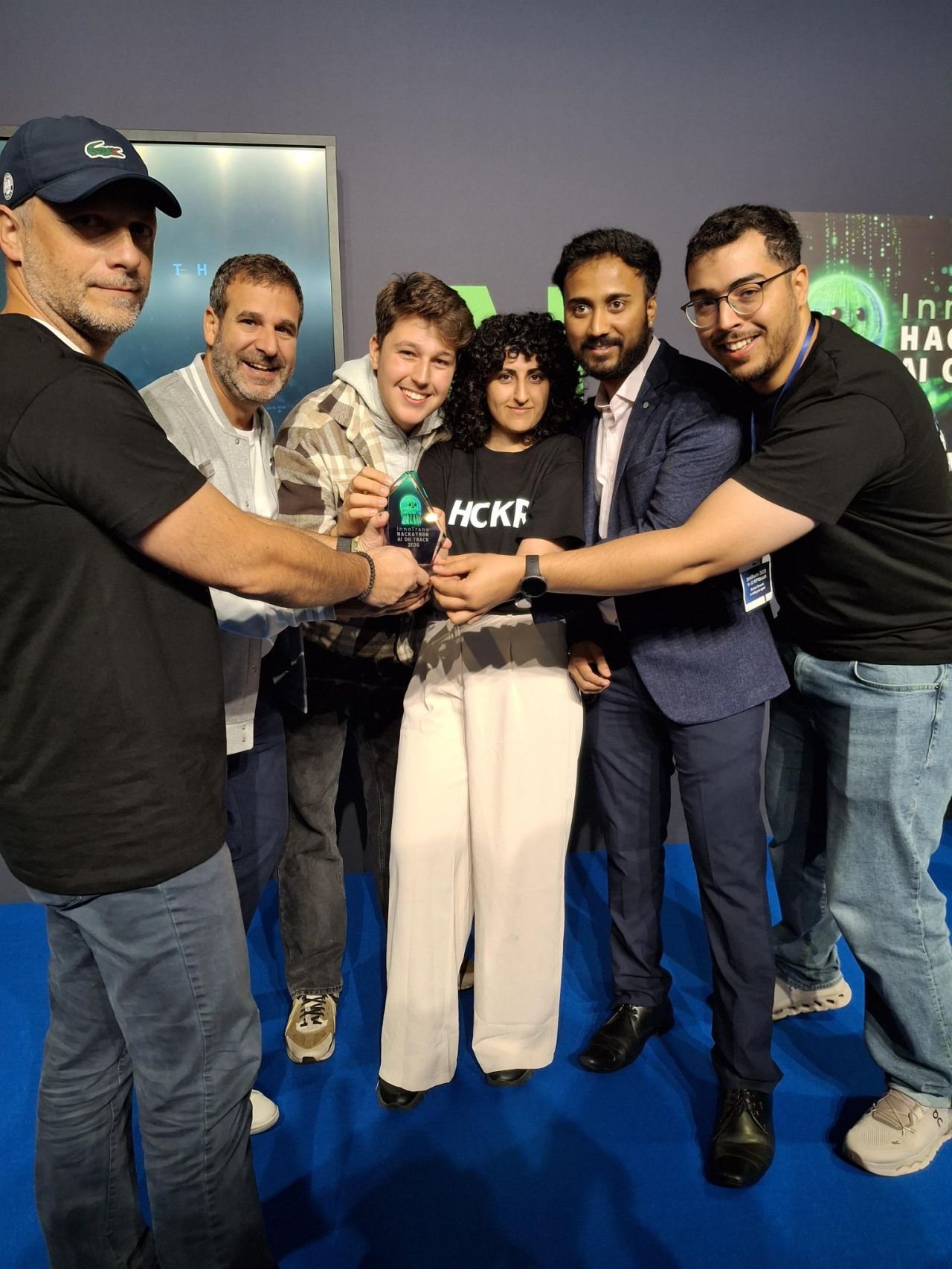
Last week, our team won 1st place in the AI Track at the InnoTrans 2026 Hackathon, hosted by FACTORY-C and Alstom, with NextMove — an agentic AI system for the railway control room.
Repo: github.com/mralioo/NextMove · Animated system design: open the walkthrough
The problem
The challenge brief, and the conversations we had at Alstom’s booth, pointed at the same gap: when something goes wrong on the network — say, “U7 is suspended between Hermannplatz and Karl-Marx-Straße — where can passengers reroute, which stations face increased demand, and where should we send staff?” — an operator’s honest answer requires correlating live disruption data, historical demand patterns, and station capacity limits across several separate dashboards, under time pressure. That reassembly work is exactly the kind of thing an AI team can do in parallel — as long as it doesn’t guess at the numbers.
That constraint became our design principle: the model never invents a number. Every figure in the final brief has to be traceable to a deterministic tool call, not to the language model’s imagination.
Why an agent team, not an agent
A single LLM call that both does the analysis and writes the answer has no way to catch its own mistakes. We split the work into four roles instead, each with a narrow job and the ability to block the ones downstream:
| Role | Job | Code |
|---|---|---|
| Dispatcher | Interprets the question, routes it, rejects off-topic or manipulative input | agent/supervisor.py, router.py, guardrails.py |
| Analyst | Pulls data through MCP tools, runs the passenger-demand forecast with TabPFN | agent/worker.py, specialists.py, executor.py |
| Inspector | Recomputes the key figures independently from raw data and the quality database, checks them against operational constraints, and can send the Analyst back for another round | agent/evaluator.py, loop.py, quality_mcp.py |
| Writer | Produces a one-screen brief — verdict, evidence, recommended action, caveats, sources — never the full report unless asked | agent/writer.py, artifacts.py |
The Analyst and Inspector run in a bounded loop (two rounds max, 40 seconds): the Inspector doesn’t just sanity-check the Writer’s prose, it independently recomputes ground truth from the raw CSVs and the quality database, and that ground truth outranks whatever the Analyst produced. If verification fails, the system declines rather than guesses. NextMove advises; the operator decides.
Grounding and memory
Two things keep the system honest and let it improve over time:
- Numerical facts are forced through MCP tools, never through the LLM’s own recall — three FastMCP servers expose 57 tools across data access, TabPFN forecasting, and quality/ground-truth checks. Forecasts are explicitly labeled as estimates, not facts.
- Operator feedback writes back into a Neo4j knowledge graph. Every rating and every “here’s what I actually did” report becomes a precedent, so a similar future question surfaces what operators did last time and how it went — not just a fresh forecast.
Stack
Google ADK for the agent team · FastMCP for the tool servers · TabPFN as the tabular foundation model behind the demand forecast · LiteLLM to route each role to its own model (Azure/OpenAI) · FastAPI + React/Vite for the operator UI · SQLite for the knowledge base and observability store · Neo4j for the knowledge graph · Streamlit for the internal dashboard.
The team
Built with Till Determann, Kawther Ramadan, and Harsh Patel — four roles on the whiteboard, four of us building, over roughly 36 hours.
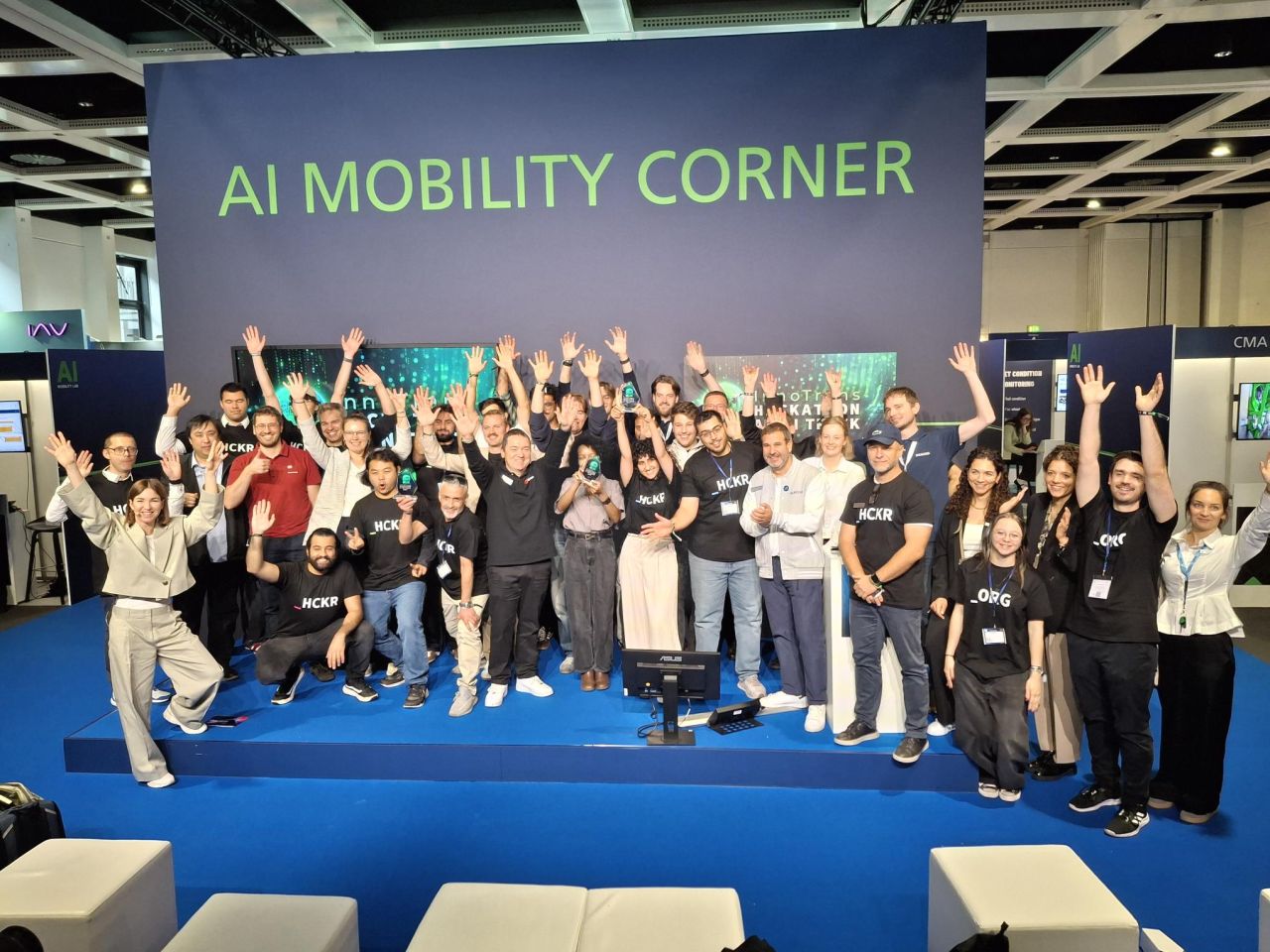
Thanks to our mentors — Nenad Mijatovic, Simone Libera, Victor Andres Martin Moreno, and Annelie Andersson — for the sharp feedback throughout. Thanks to the Alstom team for the booth walkthrough and for showing us the real systems behind the challenge; seeing the operational context firsthand shaped how we thought about the Inspector role. And thanks to FACTORY-C and InnoTrans for putting the whole thing together.
Official announcement: Alstom’s LinkedIn post.
Try it
The README has a make install && make up quick start, and the animated walkthrough is the fastest way to see the agent hierarchy, the verification loop, and the knowledge graph in motion without running anything locally.